CEXs, DEXs & Bridges: How Crypto Really Moves - Part 7 of Crypto 101 with Fere AI

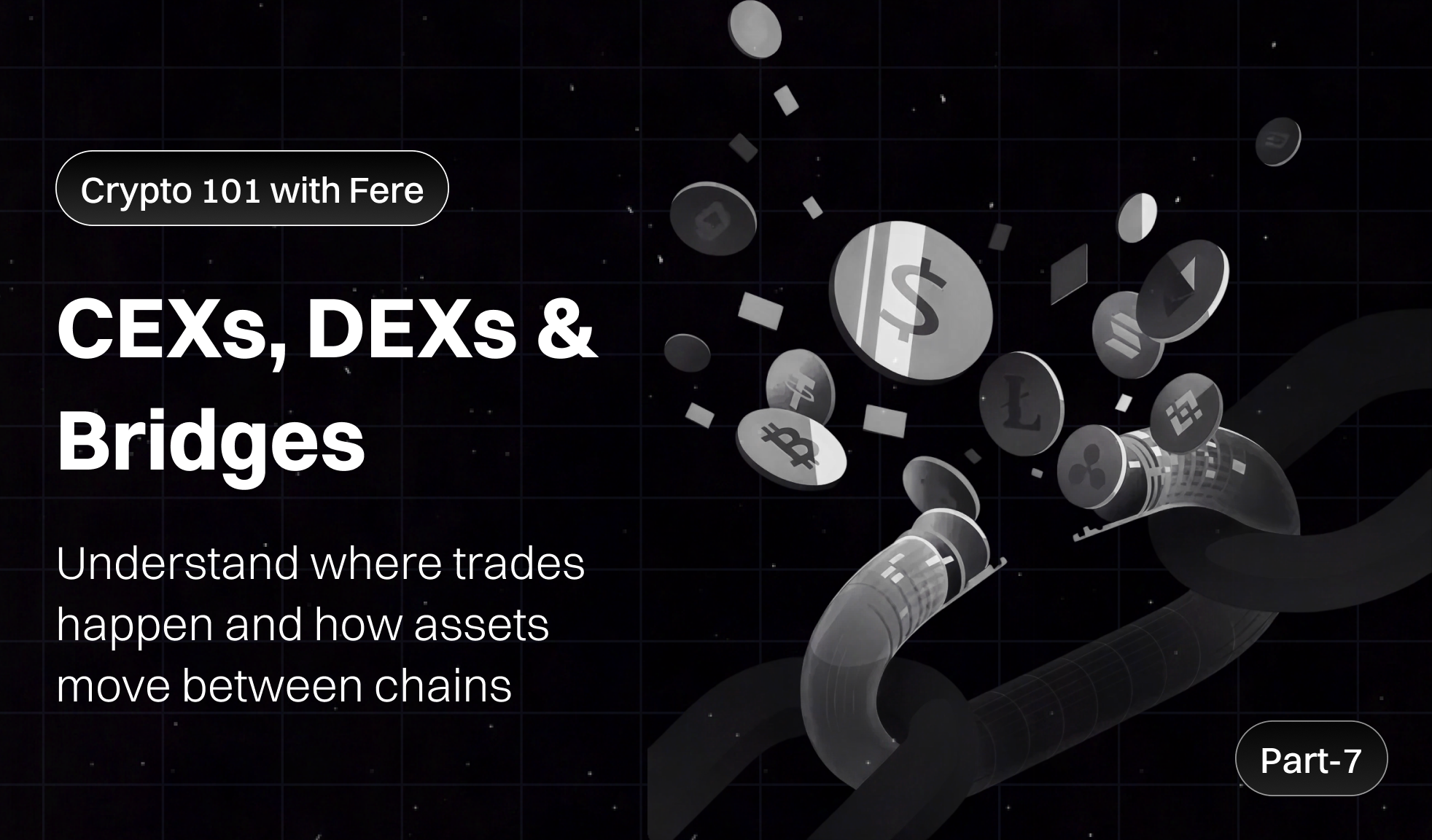
Crypto is not just one marketplace, it is a collection of different markets connected to each other.
Some trades take place on exchanges run by companies, some take place directly from your wallet, whereas some require you to even move your assets from one chain to another before you can even trade.
If you understand where trades happens and how assets move, everything else starts to make sense.
You can learn all of this just by asking Fere AI.
What is a Centralized Exchange (CEX)?
A centralized exchange, or CEX, is the easiest place to start.
It looks and feels like any other app. The onboarding flow is also very simple:
- you sign up
- You deposit money
- You trade inside their website/app
The exchange holds your funds on your behalf and this makes onboarding simple and fast.
CEXs are good for:
- Fiat onramps
- High liquidity on major tokens
- Beginners who want simplicity
The only tradeoff is custody. You leave your assets in the platform and trust it to keep them safely.
What is a Decentralized Exchange?
A decentralized exchange (DEX) works differently. There is no account you create on here and there is no custody.
You can directly connect your wallets and trade straight from your wallet balance.
Liquidity comes from pools provided by users and prices are set by algorithms instead of order books.
Why do Bridges exist?
Not every token lives on every chain.
Bitcoin lives on Bitcoin. Solana tokens live on Solana. Ethereum tokens live on Ethereum.
If you want to use a token on another chain, you need a bridge.
Bridges help you move assets from one chain to another by locking them on one side and then minting or releasing them on the other side.
These tools are powerful but also one of the highest risk parts of crypto.
Many large exploits have happened at the bridge layer.
This means you need to understand bridges better before you go the extreme route, and try to avoid them altogether.
How Trades and Bridges Connect
A common flow looks like this:
You buy a token on a CEX. You withdraw it to your wallet. You bridge it to another chain. You trade it on a DEX.
Each step matters.
Each step has fees, risks, and liquidity considerations.
How Fere AI Helps You Navigate All of This
This is where Fere AI becomes your co-pilot.
You can ask:
- “Where is the deepest liquidity for this token”
- “Which chain was this token launched on”
- “What is the safest way to trade this token”
- “What is the best bridge for this route”
Fere AI combines market data, liquidity info, and chain context to give you clear answers.
You do not need to jump between ten tabs anymore.
Just Ask Fere AI:
“What’s the safest way to trade and bridge $SOL?”
Final Thoughts
Before you swap, bridge, or move assets across chains, pause for one second.
Just talk to Fere AI.
Understanding the path your assets take is how you avoid expensive mistakes.
Try it today: